What the energy class on a listing tells you
The APE certificate, the classes from A4 to G, and why in a period building the class matters less than it seems.
· by Chiara Brambilla · 1 min read
Every listing for sale or to rent in Italy has to show the energy class of the home. It comes from the Attestato di Prestazione Energetica (APE), signed by a qualified technician after a visit.
The classes
The scale runs from A4, the most efficient, to G. There are four A classes (A4, A3, A2, A1), then B, C, D, E, F and G. On our listings we show the class stated in the certificate.
The APE also gives a number, the energy performance index, in kWh per square metre per year. It is the most useful figure for comparing two similar homes.
What it measures
The class estimates how much energy is needed for heating, cooling and hot water with standard use. It depends on the building envelope (walls, windows, roof) and the systems. It does not tell you what you will spend: that depends on how you live in the home and on the building’s heating.
In period buildings
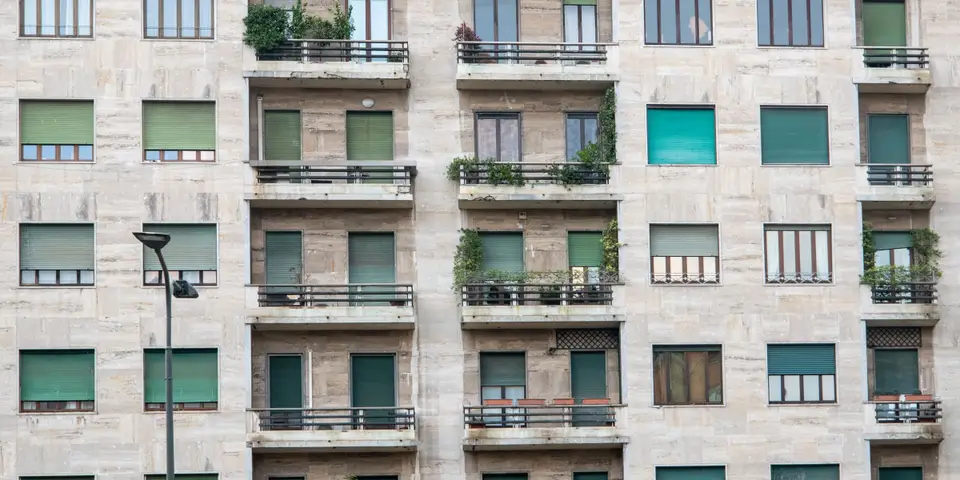
Many of the homes we sell in Brera, Porta Venezia or Isola are in buildings from the early 1900s. Thick walls keep the heat out in summer, but old windows and a shared heating system often push the class towards E or F.
Before making an offer, ask three things: the heating costs of the last two years, whether the building has approved work on the facade or the boiler, and whether the windows have been replaced. They often say more than the letter.
How long it lasts
An APE is valid for ten years, but has to be redone after work that changes the home’s performance, such as new windows or a new heating system. The seller gives it to the notary, who attaches it to the deed.